Bold, Low-Cost Coding on Cases & Bulk Packaging
Large Character (DOD) Printer Range
Robust, high-visibility inkjet coding for outer cases, sacks, drums, pallets and porous or non-porous surfaces — at the lowest cost per print.
Large Character Coding
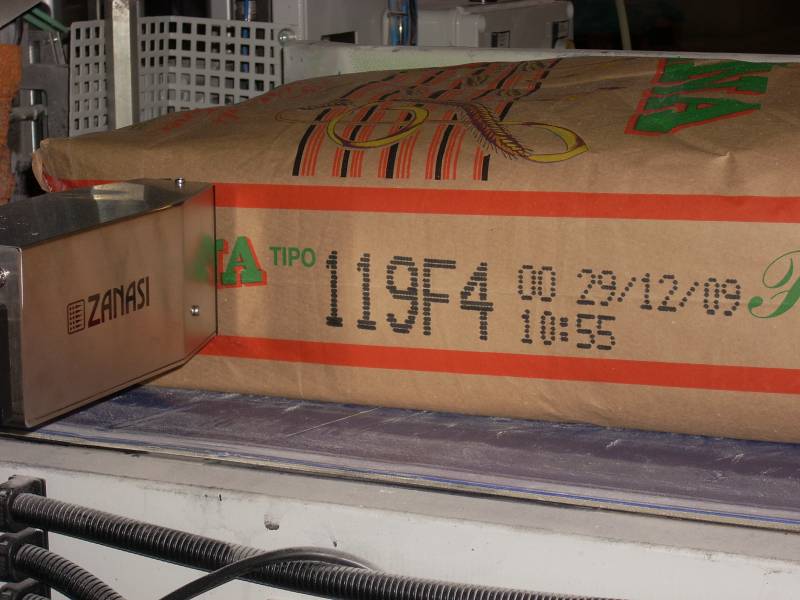
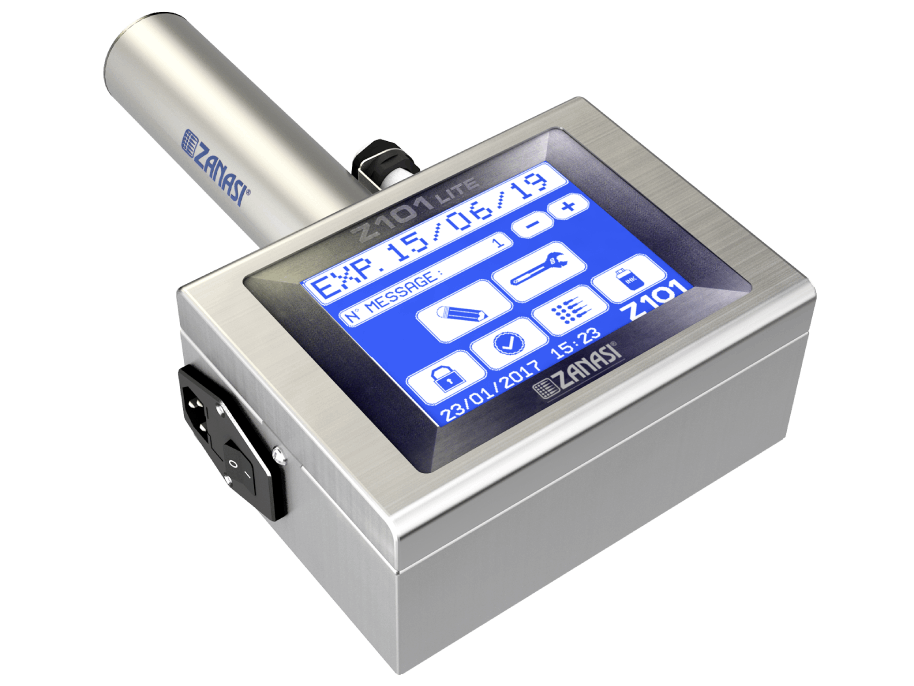
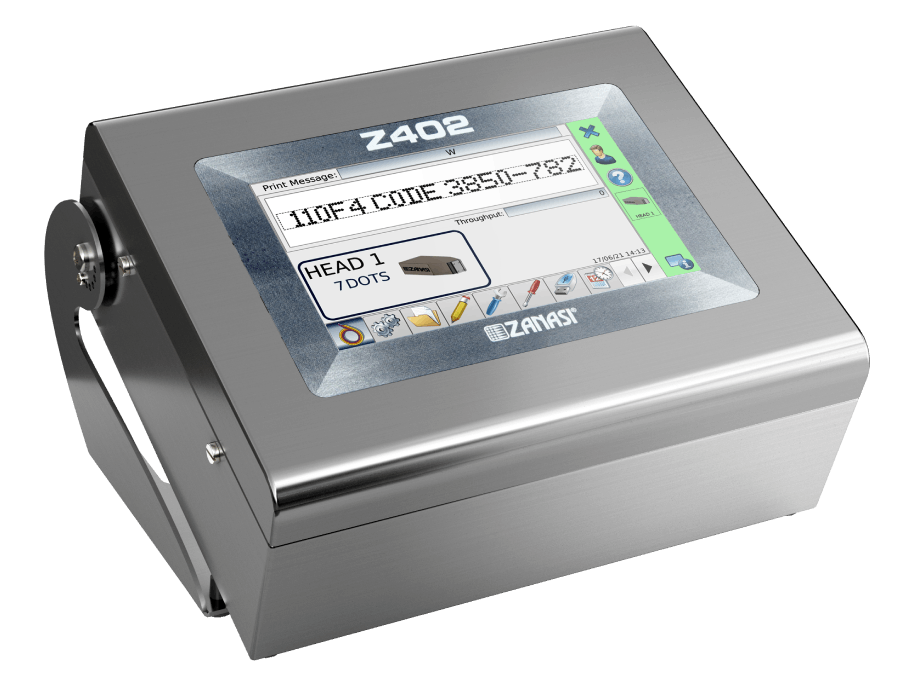
Large Character Coding — also known as Drop-on-Demand (DOD) inkjet — is an industrial printing method designed to mark bold, highly visible text, codes, logos and barcodes directly onto outer packaging and bulk products. Instead of jetting a continuous stream of ink like CIJ, a DOD printhead fires individual ink droplets only when and where they are needed, building up large, easy-to-read characters one dot at a time.
It is the go-to technology for secondary (outer) packaging — corrugated cases, cartons, shrink-wrapped trays, sacks, bags, drums, pallets, pipes and panels — on both porous and non-porous surfaces. With print heights typically ranging from around 7 mm up to roughly 190 mm (depending on the printhead and configuration), Large Character Coding replaces costly pre-printed boxes and labels with on-demand, variable information printed directly onto the surface.
Because the system uses simple, robust components and large droplets of low-cost ink, it delivers an extremely low cost per print — making it the most economical way to apply clear shipping and identification marks at scale.
Why Large Character Coding
Large Character Coding is the preferred choice for manufacturers and distributors who need bold, legible information on outer packaging without the expense of pre-printed cases or applied labels. Customers choose it when they require:
- High-visibility codes that can be read across a warehouse or loading bay
- Direct printing onto porous and non-porous surfaces (cardboard, plastics, wood, metal)
- Variable data — dates, batch and lot numbers, product descriptions, barcodes and logos
- The lowest possible cost per code on secondary packaging
- A move away from expensive pre-printed boxes or label-and-apply systems
Typical applications include:
- Food & Beverage: outer case coding, batch and best-before dates, traceability
- Logistics & Distribution: shipping marks, handling instructions, barcodes for scanning
- Building Materials & Chemicals: sacks, bags, drums, and pallets identification
- Agriculture: bags, crates, and bulk packaging coding
- Manufacturing & Industrial: pipes, panels, profiles, and bulk product marking
- Packaging Converters: brand marking and variable codes on cartons and cases
The Most Common Large Character Problems We Resolve
Why Clients Choose Our Large Character Printing
Our Large Character (DOD) systems are built for the realities of a busy South African production and dispatch environment — bold output, rugged build quality and the lowest cost per print.
High Visibility
Bold characters up to large print heights ensure codes are legible at a distance — ideal for shipping marks and warehouse identification.
Low Total Cost of Ownership
Low-cost inks, simple maintenance and robust components keep running costs down and uptime high across multiple shifts.
Large Character Coding FAQs
Large Character Coding, or Drop-on-Demand (DOD) inkjet, is an industrial printing method that applies bold, highly visible text, codes, logos and barcodes onto outer packaging. The printhead fires individual ink droplets on demand to build up large characters, making it ideal for cases, cartons, sacks, drums and pallets where the code needs to be seen clearly from a distance.
Large Character DOD prints on both porous and non-porous surfaces, including corrugated cardboard, cartons, plastics, shrink film, wood, metal, pipes, panels, sacks and drums. Ink type is matched to the surface to ensure strong adhesion and legibility.
Most installations are completed quickly, including mounting the printhead(s), integrating product sensors or encoders where required, and setting up your print jobs. Operators are trained on-site so production can resume with minimal disruption.
Print height depends on the printhead fitted and how it is configured. A single head covers a defined band, and heads can be combined to achieve larger overall print heights — up to roughly 190 mm — or to print on more than one side of a pack at once.
Maintenance is straightforward. Routine care centres on keeping printheads clean and replacing inks as needed. Because the systems use simple, robust components, they are easy to operate and service, which keeps downtime and running costs low.
Yes. This is one of the most popular uses. Printing variable information directly onto plain brown boxes removes the need to hold stock of expensive pre-printed cases. It lets you change text, dates, barcodes, and logos instantly — at a fraction of the cost per code.
Yes. A single controller can drive multiple printheads, so you can code two or more sides of a case in one pass, or run different print jobs across multiple production lines from one unit.
Marking Solutions provides full national support across South Africa, including installation, operator training, technical support, preventative maintenance, and locally stocked inks and spares for rapid turnaround and minimal downtime.
Yes. The systems are built with stainless-steel construction designed to withstand dust, moisture, and high temperatures, making them well-suited to demanding industrial, warehouse, and dispatch environments running multiple shifts.
Yes. The systems print single or multiple lines of text, dates, batch and lot numbers, product descriptions, logos and machine-readable barcodes. The higher-resolution printhead option is recommended where you need sharper detail, smaller multi-line text or reliably scannable barcodes.