Permanent codes. No ink, no ribbons, no cleaning.
Marksol laser printers mark the date, batch, barcode or logo straight into the material. No ink, no solvent, no ribbons, no cleaning. Just crisp, tamper-proof codes at up to 1 000 characters per second, shift after shift.
- No inks, solvents or ribbons: the only consumable is the fume extractor's filter bag.
- Permanent & tamper-evident: codes can't smudge, rub off or be swapped. Built-in anti-counterfeiting.
- Built to run 24/7: 50 000 to 100 000-hour MTBF, air-cooled, install in any direction.
- Local installation, training & support from JHB, Durban & Cape Town.
Want to see it mark your product first? Call 011 466 0030 and ask for a free laser sample.

Get your laser quote
Tell us what you mark on and how fast the line runs. We'll recommend CO2, fibre or UV, mark a free sample on your product, and send a quote, usually within one business day.
When laser is the right choice.
Inkjet and thermal transfer are the right fit for many applications, and we supply both. Laser earns its place when one or more of these matter to you.
High volumes, long runs
On a line that codes all day, every day, the monthly ink or ribbon spend adds up. Laser's only consumable is a filter bag, so the payback is quickest where volumes are highest.
The code has to be permanent
Products that get cold, wet, oily or handled a lot, or where traceability and anti-counterfeiting matter. A laser mark is part of the material and can't be wiped off or swapped.
Minimal operator attention
No cartridges to swap, ribbons to change or nozzles to clean. Set the job on the touch screen and the line keeps running, shift after shift, 24/7.
A clean, dry process
No ink, solvent or ribbon waste on the line. Well suited to food, pharma and cosmetics environments with strict hygiene and audit requirements.
The mark is made in the material, not on it.
A laser printer uses a focused beam of light, not ink, to put the code on your product. The beam moves across the surface at high speed and changes it just enough to leave a clear, permanent mark: lightly etching cardboard, glass or plastic, or taking the top layer of ink off a printed label to show a contrasting code underneath. Nothing is added to the product, so there is nothing to dry, nothing to top up and nothing to rub off.
Different materials respond to different types of laser light, which is why we offer three: CO2 for packaging, fibre for metals and hard plastics, and UV for sensitive plastics.
- Fonts, logos, graphics, barcodes, QR, Data Matrix (GS1), serial numbers, date, time, shift and counters
- Flying (on-the-move) marking at 150 to 500 m/min, or static marking of several products at once
- Red guide light for set-up. Mark in any direction, in tight spaces, next to conveyors and pouch packers
- USB, Ethernet and RS232, with I/O for sensors, encoders and line status signals
UMSC30 / UMSC60
The all-rounder for packaging. Cartons, labels, flexible film, PET and glass bottles, leather.
DLFM
Metals, tins and lids, PE/PP hard plastics and film. The fastest flying speeds, up to 500 m/min.
UMS10W / UMS05W
Cold marking for sensitive substrates. HDPE and LDPE bottles, caps, mono film, pharma packs. No pin-holing, no heat damage.
Laser vs. consumable-based coding
What changes on your line when the code is made by light instead of ink or ribbon.
| On the line | Consumable-based coders (CIJ, TIJ, TTO, labels) | Marksol laser |
|---|---|---|
| Consumables | Ink, solvent, cartridges or ribbon bought every month | No inks, solvents or ribbons. Only fume-extractor filter bags |
| Code permanence | Sits on the surface; can smudge, fade or be wiped off | Marked into the material; permanent and tamper-evident |
| Changeovers & cleaning | Cartridge swaps, ribbon changes, nozzle cleaning | No changeovers. Set the job on the touch screen and run |
| Reliability | Depends on ink condition, humidity and operator care | 50 000 to 100 000-hour MTBF, 24/7 continuous operation |
| Speed & content | Limited lines of text; graphics and 2D codes at a cost | 1 000 characters/s, any font, logo, barcode or 2D code |
| Hygiene & environment | Solvent fumes, ink waste, ribbon waste | Clean, dry process. Fume extraction only |
| Cooling & utilities | Compressed air on some CIJ models | Air-cooled CO2 and fibre, standard 100–240 V supply |
Based on manufacturer specifications. Running another coder today? Tell us the model and your monthly consumable spend and we'll show you the payback period on a laser.
Three laser sources. One for every material.
Not sure which fits? Send us a sample of your product and we'll mark it on the right laser and send it back.
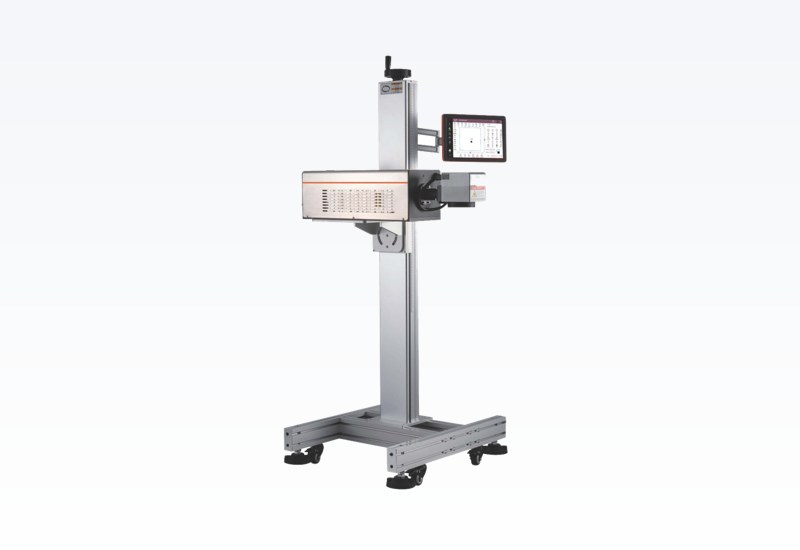
UMSC30 · UMSC60
CO2 laser · 10.6 µm standard, 9.3 µm and 10.2 µm optional · 30 W or 60 W
The workhorse for food and beverage packaging. A new vector-control algorithm marks faster with lower power draw, and the compact all-in-one body drops straight into conveyor lines and pouch packers.
- 10-inch touch screen, Linux control system
- Marking fields from 70 x 70 up to 175 x 175 mm
- Air-cooled, IP54 standard, IP65 optional
- USB, Ethernet, RS232, 2 in / 3 out I/O
Options: 12 000 mm/s scan · 200 or 300 m/min flying · 9.3 µm or 10.2 µm wavelength (e.g. for PET) · high-end generator
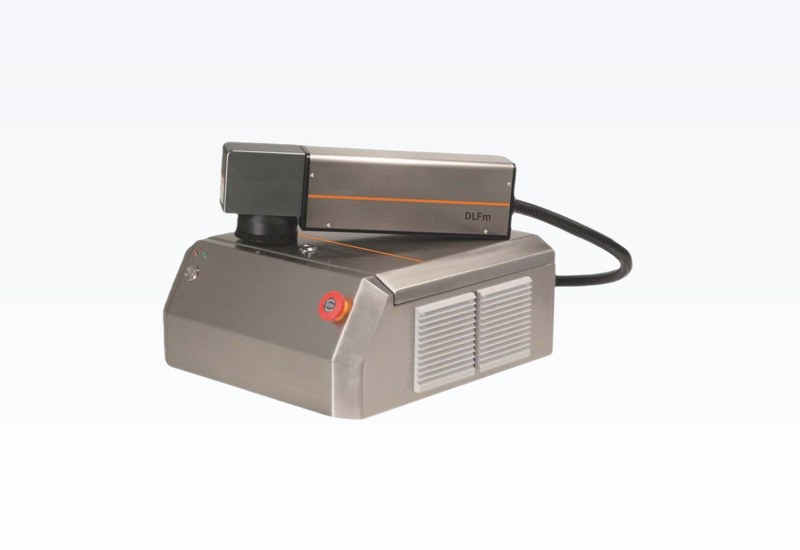
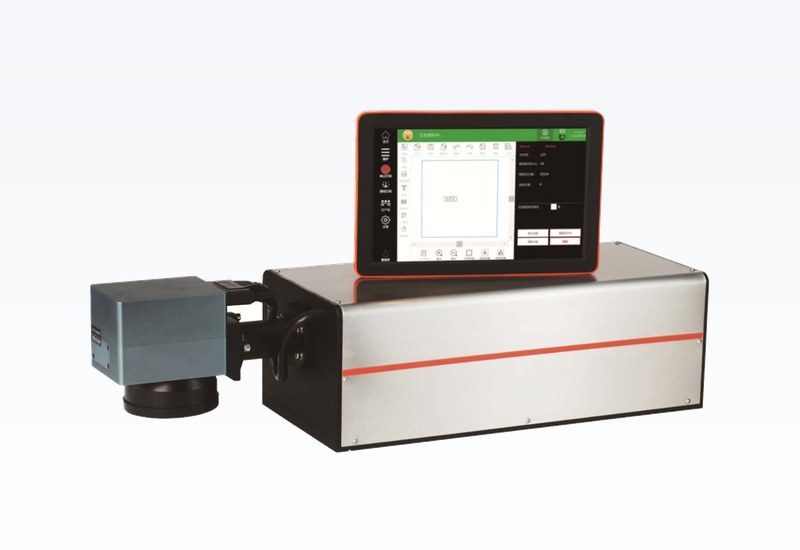
DLFM
Fibre or MOPA laser · 1064 nm · 30 W, 60 W or 100 W
A laser body only 418 x 93 x 110 mm that fits where nothing else will. Anti-interference design for 24-hour continuous operation on cans, lids, PE/PP containers and film.
- Three power levels, fibre or MOPA source
- Marking fields from 110 x 110 up to 400 x 400 mm
- Fan-cooled, no chiller, IP54
- USB, Ethernet, RS232, 2 in / 3 out I/O
Options: 150, 300 or 500 m/min flying · five lens sizes · fume extractor
UMS10W · UMS05W
UV laser (Nd:YVO4) · 355 nm · 10 W or 5 W
Cold marking for materials a CO2 laser can't touch. High-definition, scannable Data Matrix and QR codes on HDPE, LDPE and mono film without pin-holing or thermal damage.
- Four marking fields, 110 x 110 up to 400 x 400 mm
- Built-in power self-test and one-click optimisation
- Water-chiller cooled for stable output
- USB, Ethernet, 2 in / 3 out I/O
Best for: dairy and juice HDPE bottles · caps and closures · pharma and cosmetics packs · GS1 Data Matrix
* Standard flying speed. Actual speed depends on configuration, material and code content. Specifications are indicative and subject to change.
Not sure if laser will mark your product? Send us a sample. We'll mark it with the right laser and courier it back, free, so you can see the result before you commit.
Request a free sampleTap what you mark on.
The wavelength has to match the material. Here's where each of the three sources is strongest.
UMSC30 / UMSC60 CO2
Engraves a clean, high-contrast code into corrugated and folding cartons. The go-to for case coding and outer packaging.
Also consider: DLFM fibre for very high line speeds.
Food & Beverage
Best-before and batch codes that survive chillers, condensation and transit. FSSC 22000 and HACCP friendly: no ink on the line.
Pharmaceutical
GS1 Data Matrix and serialisation on cartons, bottles and blisters. Permanent, SAHPRA-ready traceability.
Cosmetics & Personal Care
Clean marks on premium packs, tubes and caps without spoiling the finish.
Beverage & Bottling
PET, glass and cans at full line speed. One laser replaces the CIJ, its ink and its solvent.
Metal & Industrial
Serial numbers, logos and 2D codes on tins, lids, components and extrusions.
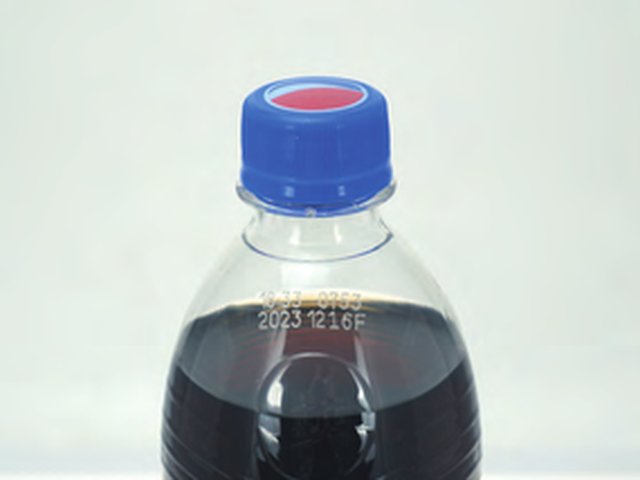
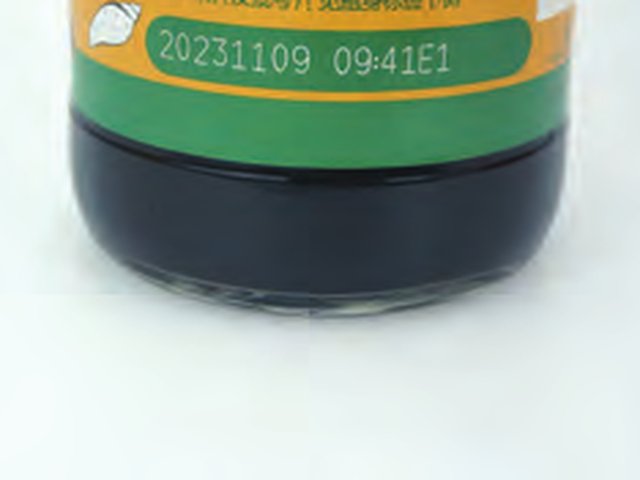
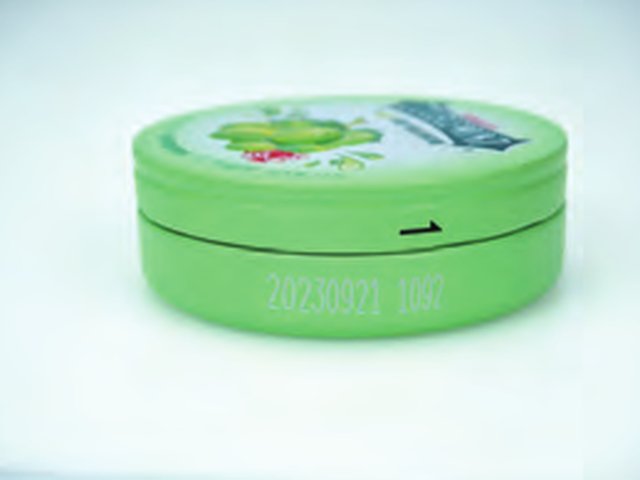
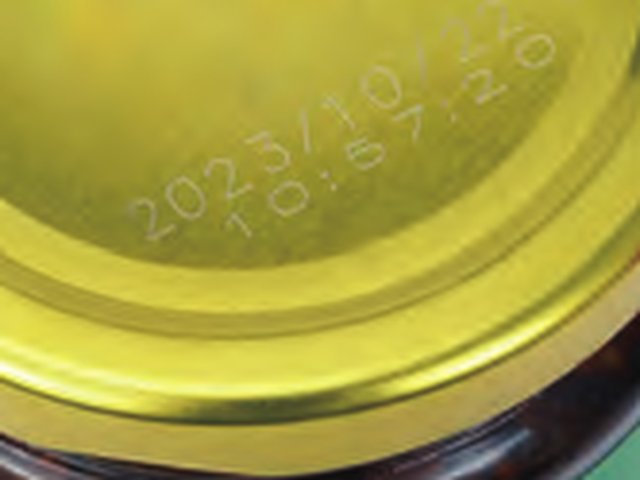
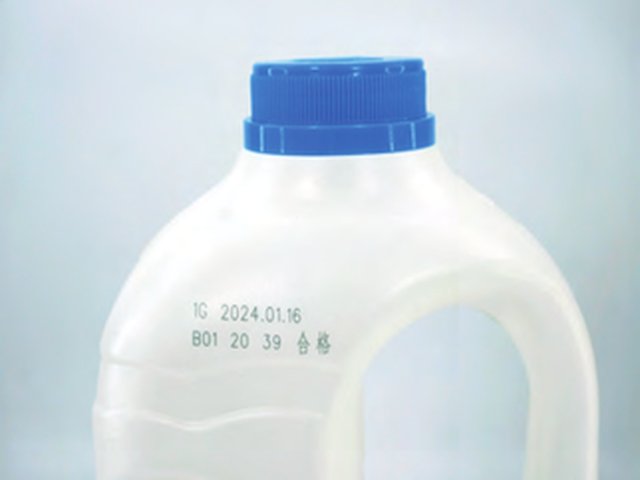
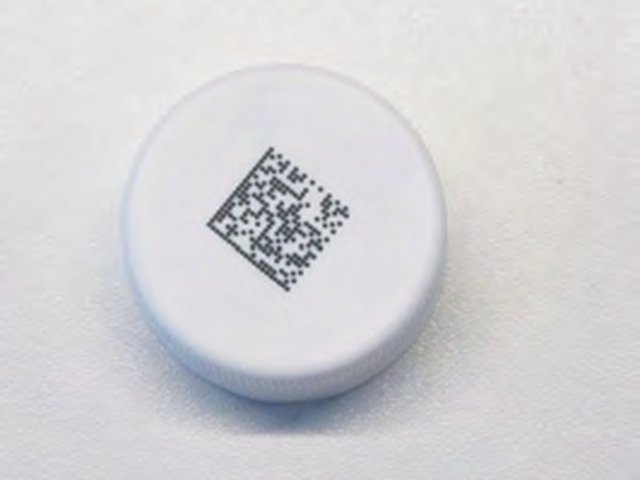
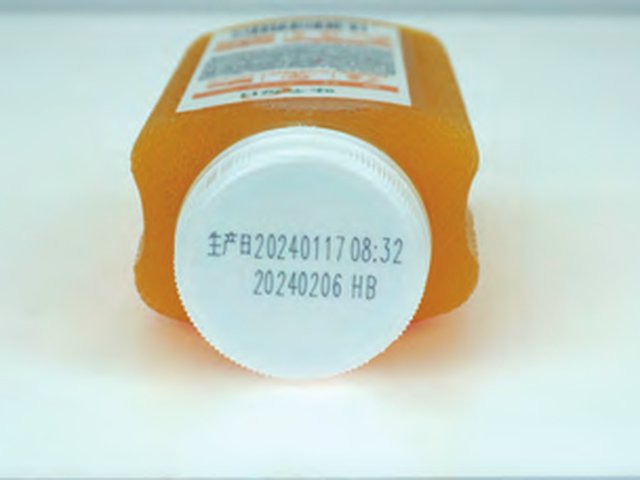
This is what a laser code looks like.
Marked on our lasers. Crisp, permanent and scannable, on surfaces where ink struggles.


Trusted by South African manufacturers

Built for the line, not the lab.
Industrial laser coders specified for South African production: compact, air-cooled, and supported by the team that installs them.
No inks, solvents or ribbons
The only consumable is the fume extractor's filter bag. Your running cost is electricity and filters, and the payback on busy lines is often inside the first year.
Permanent & tamper-evident
The code is part of the product. It can't be wiped off, swapped or re-labelled, which makes counterfeiting and grey imports easier to spot.
Up to 1 000 characters/s
Intelligent vector control and 8 000 to 12 000 mm/s scanning keep up with the fastest fillers and flow wrappers, static or on the move.
Fits anywhere
Compact bodies (the DLFM is 418 x 93 x 110 mm) that install in any direction, with lens options to mark from 70 mm to 400 mm fields.
Built for 24/7
50 000-hour MTBF on CO2, up to 100 000 hours on fibre. Air-cooled, anti-interference design, no chiller to maintain on CO2 and fibre.
Connects to your line
USB, Ethernet and RS232 for ERP and MES. I/O for sensors, encoders and running, ready and fault status. 26 built-in fonts and your own.
Specified, installed and supported by a South African team.
Marking Solutions has kept SA production lines coding since 1998. Our technicians commission every laser on site, train your operators and stay a phone call away.
Free sample marking
Send us your product. We mark it on the right laser and courier it back so you see the result first.
Installation & training
Mounting, lens selection, line integration and operator training, done on site by our technicians.
Remote troubleshooting
Fast phone and WhatsApp support, with Ethernet remote access to the controller where you allow it.
Service plans & spares
Lenses, filters and spares held locally, with maintenance plans to keep the laser running.
27–29 October · CTICC, Cape Town. Bring your product and we'll mark it on the stand.
From enquiry to laser coding on your line
We specify the laser around your product, line speed and environment, so it works from day one.
Tell us about your line
Material, line speed, code content, marking position and the environment the laser will live in.
Free sample marking
Send us your product. We mark it with CO2, fibre or UV and send it back with our recommendation and a quote.
Demo on site or at Propak
See the laser mark your product at line speed before you commit.
Install, train, support
Mounting, integration and operator training on site, then local service for the life of the laser.
Laser coding questions
What consumables does a laser use?
No ink, solvent, cartridges or ribbon. The one consumable is the filter bag in the fume extractor, replaced periodically depending on what you mark and how much. Beyond that it's keeping the lens clean and the electricity, at 300 to 600 W depending on the model.
CO2, fibre or UV. Which one do I need?
It depends on the material. CO2 (10.6 µm) suits cartons, labels, flexible film, PET and glass. Fibre (1064 nm) suits metals, tins, lids and PE/PP hard plastics, and runs the fastest lines. UV (355 nm) is a cold process for sensitive substrates like HDPE and LDPE bottles, caps and mono film, where CO2 would cause pin-holing. Send us a sample and we'll test it on the right laser.
Will the laser mark my product?
Almost certainly, but the only way to be sure is to test it. We mark your actual product free of charge, on the correct laser source, and courier it back to you with our recommendation.
How fast can it mark?
Up to 1 000 characters per second with scan speeds of 8 000 to 12 000 mm/s. Flying (on-the-move) marking runs at 150 m/min as standard, with options to 300 m/min on CO2 and 500 m/min on fibre. Actual speed depends on the material and how much content is in the code.
Can it replace my CIJ or TTO printer?
Yes. Many customers move from inkjet or thermal transfer to laser once consumable spend justifies it. We match your existing code content, mounting position and line signals so the swap is simple for operators. If your volumes are low, we'll tell you honestly whether a Leibinger CIJ remains the better fit.
Is it safe on a food line?
Yes. Laser coding is a clean, dry process with no ink or solvent near the product. Every installation includes fume extraction and the appropriate guarding for the laser class, and we train your operators on safe use.
How long does installation take?
Typically a day, including mounting, lens and focal-distance set-up, line integration and operator training. The compact bodies install in any direction, so they fit next to conveyors and pouch packers without re-engineering the line.
What support and warranty do I get?
Every laser comes with a manufacturer warranty backed by our national team: on-site installation, training, remote troubleshooting, maintenance plans, and lenses, filters and spares held locally in Johannesburg, Durban and Cape Town.
Get the right laser for your line.
Tell us what you mark on and how fast the line runs. We'll mark a free sample, recommend CO2, fibre or UV, and send you a quote within one business day.